Last 12th of June, 2023, Mt. Bulusan was finally reopened for hiking. Because climbing it had been very elusive due to its volcanic activity in recent years, I grabbed the immediate chance to hike the volcano in July of the same year. Being the 4th most active volcano in the Philippines (next to Mayon, Taal, and Kanlaon), hiking Mt. Bulusan is surely one for the books as the thought of it erupting anytime while under its domain was surely an enticing and scary thought. Of course, the natural wonders inside the volcano complex attracted many, including me.
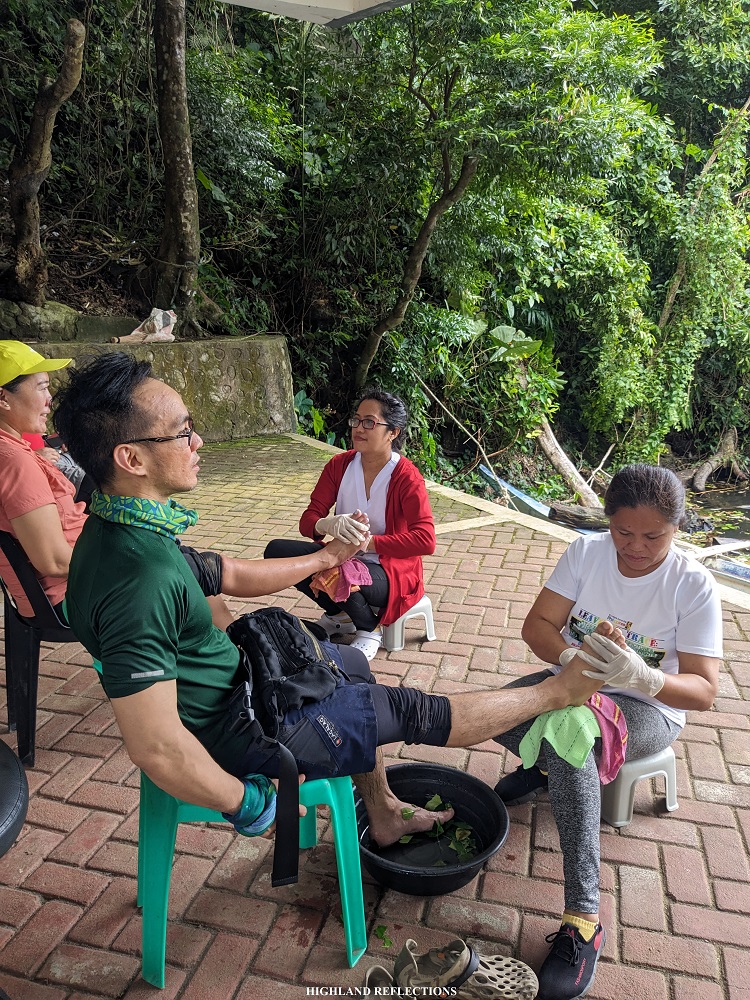
Added to Mt. Bulusan’s charm is an impressive park management made possible through the efforts of Mr. Philip Bartilet. Hats off to him! For the entire duration of the climb, we felt the hospitality of the park’s staff, their professionalism in their services, and the competence of the guides in what they were doing. The facilities also felt very modern; from the registration site up to reaching Bulusan Lake—the jump-off point—hikers would be taken via a 23-seater golf cart, and, upon arrival, one would be welcomed by medical staff who would check on your vitals. And then finally, after the hike, complementary wet towels and juices are served to hikers, coupled with a 10-minute massage and a chance to kayak Bulusan Lake—all of which are covered by the 1000-peso hiking fee!
The characteristic of the hike according to Pinoy Mountaineer are as follows:
Mt. Bulusan (Bulusan Volcano)
Major jumpoff: Lake Bulusan, Brgy. San Roque, Bulusan, Sorsogon
Days required / Hours to summit: 1-2 days / 6-9 hours
Specs: Major climb, Difficulty 6/9, Trail class 1-4
Features: Three lakes, volcanic crater, tropical rainforest
This blog narrates my experience hiking Mt. Bulusan. If you have any queries regarding the mountain, you may contact the park management via their Facebook page: https://www.facebook.com/bulusanvolcano, or email them at agap_bulusan@yahoo.com.
Day 1: Bulusan Lake to Aguingay Lake
Coming from a 16-hour ride from Manila (the traffic there really sucked!), we arrived at the Bulusan Volcano Natural Park around 10 in the morning. Upon arrival, we registered, and climbed aboard a 23-seater golf cart which took us to the vicinity of Bulusan Lake where we had an orientation and check up of vitals.

The lake was amazing. Its pristine waters emitted a magical vibe, one that felt like it is inhabited by supernatural beings. At the back of the lake, one can spot the Sharp Peak, a volcanic edifice towering above Aguingay Lake parallel to Bulusan’s summit. We will be going there!
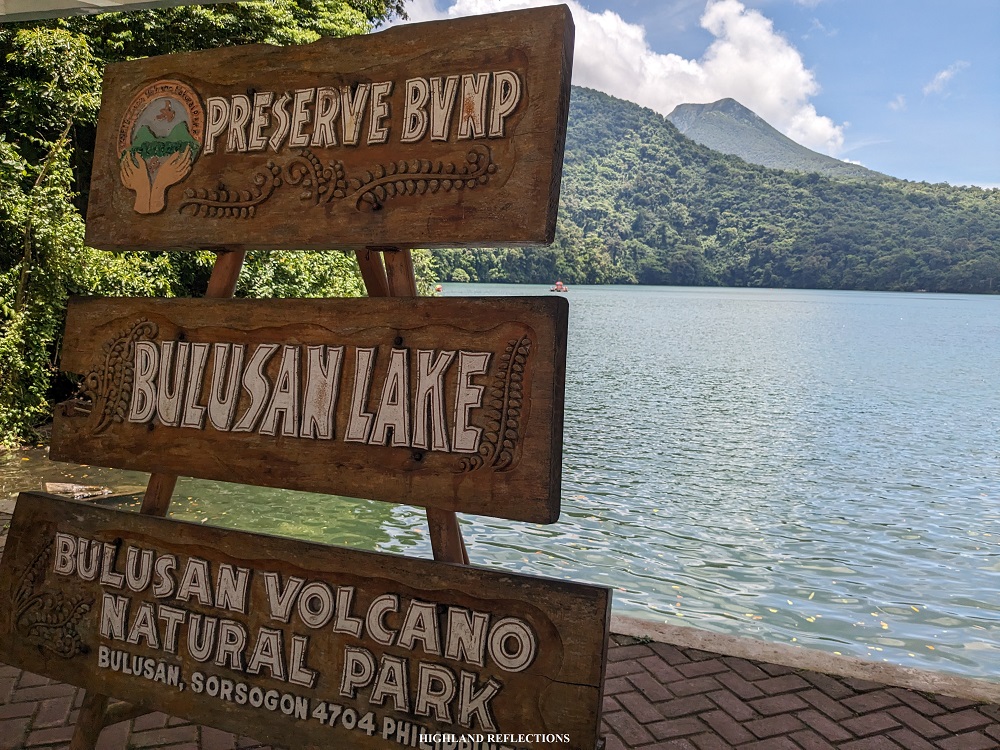
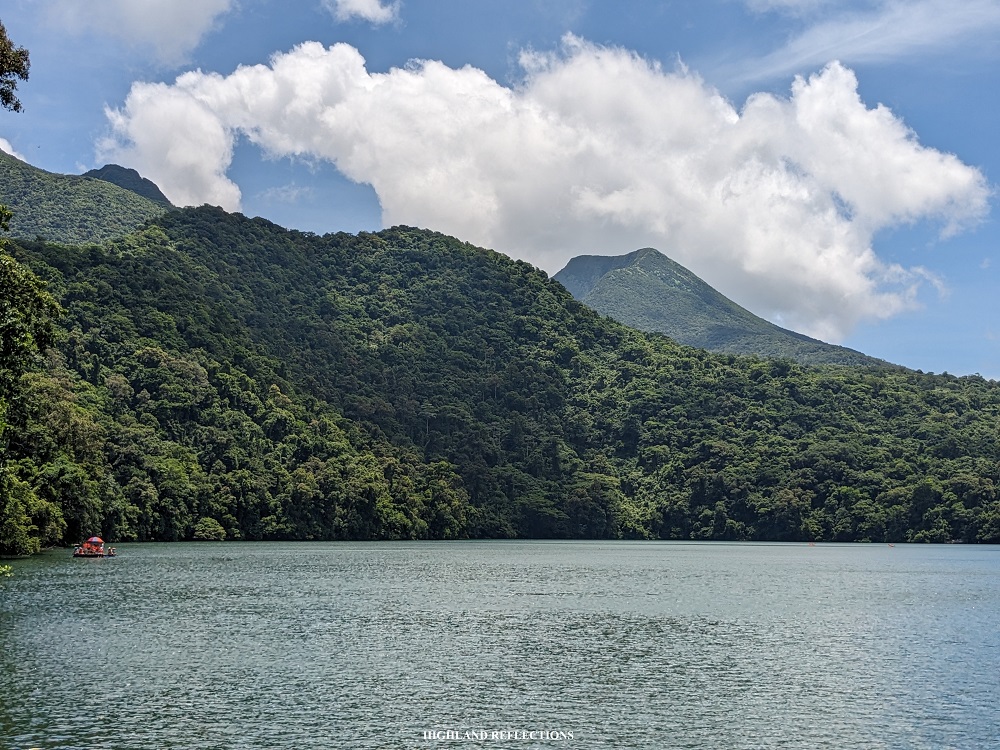
Back then, one had to kayak the entire Bulusan Lake to reach the trailhead. This route is much shorter but steeper. However, when Bulusan opened in June, the park management was unable to clean the trail, but luckily, there is another trail that circumvents the lake and meets with the original trail marked by a ranger station. This used to be the exit point back in the days, but is now also used as a trailhead. Located on the side of the road prior to reaching the gate of Bulusan Lake, it is marked by a tarpaulin that reads “Million Trees, Sorsogon Challenge”.
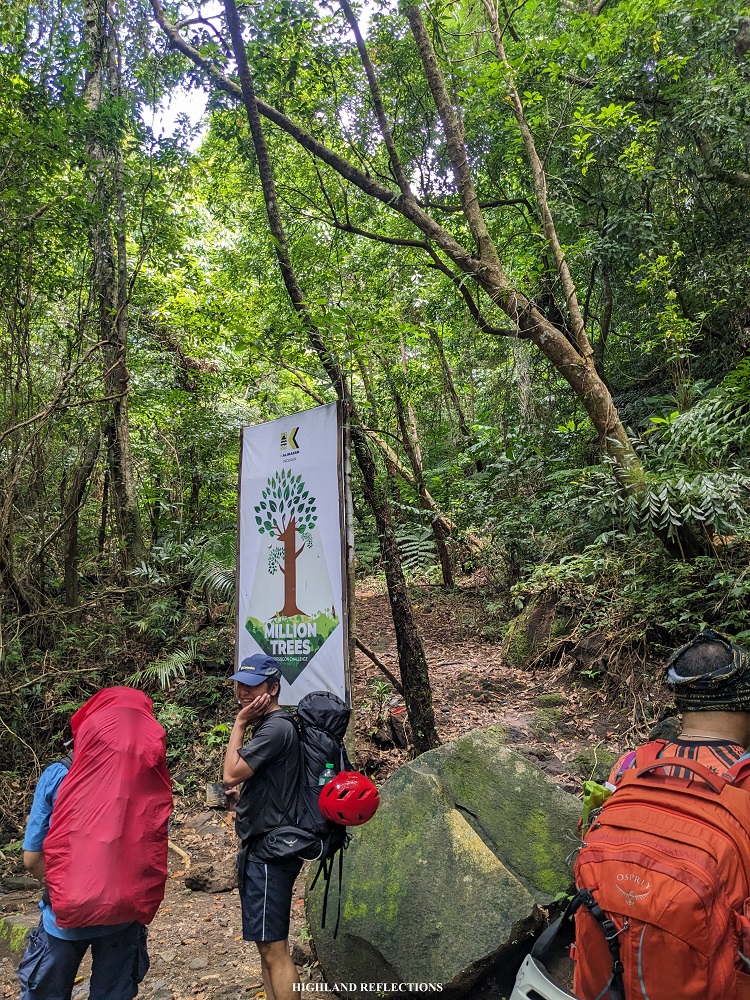
The tarpaulin signals one of the programs of the park management—a tree planting activity required for hikers. All of us picked Narra seedlings and brought it to the first kubo station where we planted it around the vicinity.
The entire trail prior to the first kubo was a wide gradually ascending path inside Bulusan’s rainforest. The trail was very clean and straightforward. Past the kubo is a continuation of the rainforest wide footpath, majority of which are flat to gradually ascending. It was a rather easy hike! There were a total of 5 kubos before reaching Aguingay Lake, the third of which, is the ranger station where the trail coming from Bulusan Lake merges.
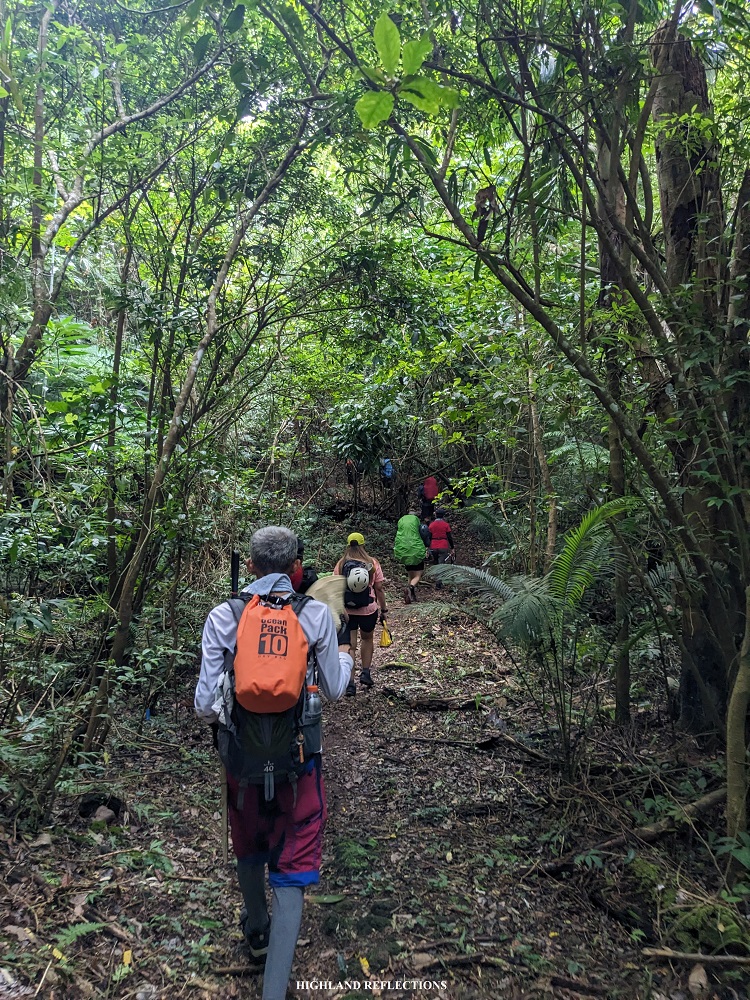
Past the third kubo is where the trail becomes narrower and wilder, marked by some fallen trees, foot wide paths, and a rainforest reminiscent of that of the mossy forest trail in Mt. Purgatory with its up and down element. Once we saw the slopes of Sharp Peak nearby, we knew we were close to the campsite.

We were already in the vicinity of Aguingay Lake past three in the afternoon, 2.5 hours after starting the hike. While relatively barren in some parts and grassy in some, Lake Aguingay did not have any large body of water, save for a small part of the plain on the left side coming from Sharp Park, which one would need to trek for about 10 minutes to reach.
The campsite in Aguingay Lake was a barren, wide area, as large as a basketball court, complete with a comfort room and a kubo where guides and organizers can cook. Guides would also fetch water in a nearby water source to fill up the drums present in the campsite.
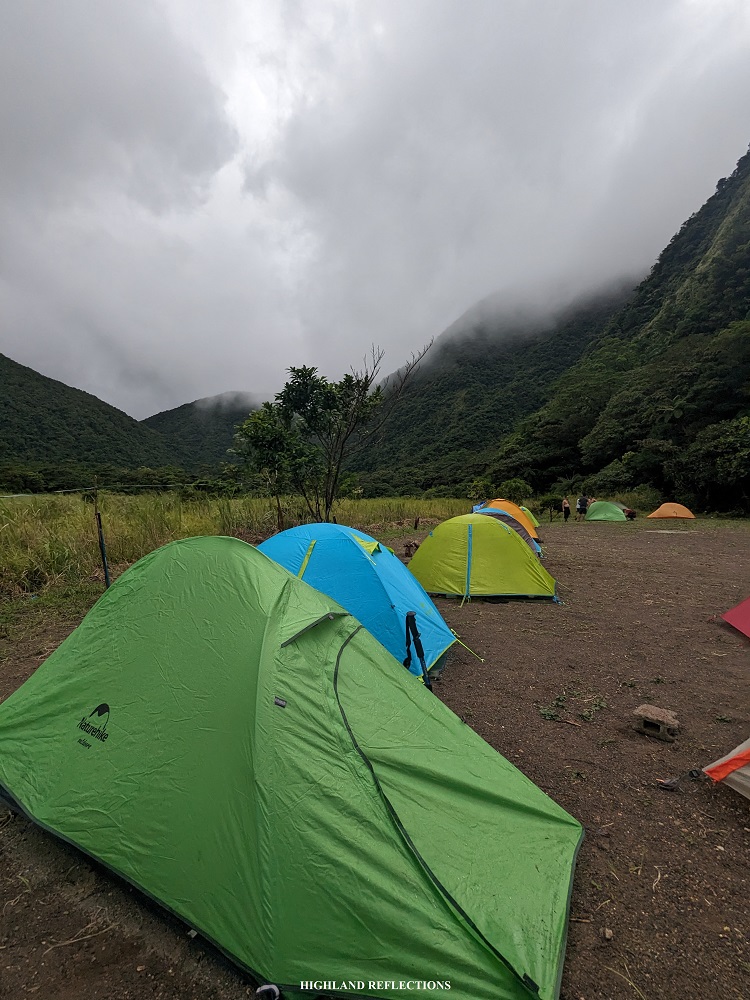
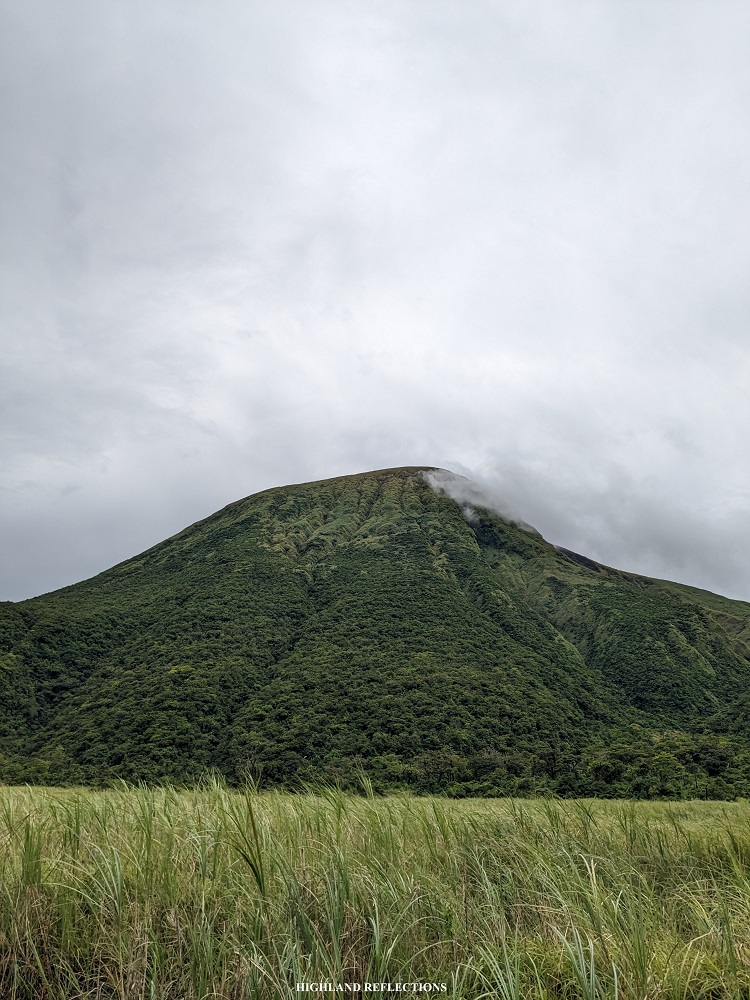
The weather in the campsite was great when we arrived. To our front, Bulusan’s summit dome looms, providing a magnificent view. However, as the clock ticked 4 in the afternoon, the clouds descended, blocking the view, sometimes forming as fog, and bringing rains from time-to-time. This rain was brought by Typhoon Egay brewing some strength in the Pacific Ocean.
That night, we had a sumptuous dinner consisting of beef veggies sautéed in oyster sauce, pork sisig, adobong santol, fried lumpiang shanghai, nilagang baboy, and ginataang baluko—a delicacy from Sorsogon! This was all thanks to our organizer, Win Calleja and his team.

Day 2: Crater Summit Assault
We woke up at 2AM to have some light breakfast and get ourselves ready for the summit assault starting at 3:30 in the morning. Surprisingly, the guides prepared a 15-minute warm-up session for the climbers, consisting of the usual acrobatic stretches to avoid cramps.
The first part of the hike involves going to the other side of the lake at the base of Bulusan’s summit, much of which are filled with tall cogon grasses, and a barren portion in the middle. Once reaching the base of Bulusan’s summit, we entered a rainforest notorious for the presence of bees. We were instructed by the guide to not look up and illuminate the trees where the bees could be settling, as they may get disturbed and attack us, especially since we climbed during the honeybee season (we even saw a fallen beehive with its beautiful small octagon patterns on the way down).
The hike inside the forest was a straightforward ascent, marked by two kubos. The last kubo, which can be reached after an hour, marks the last portion of the forest and the start of the steep cogonal part of the summit dome. We had a long rest there.
And alas, as the first ray of sunlight came, we started the last assault to Bulusan’s summit crater. During the first parts of the cogonal part, we were able to spot Lake Aguingay seemingly now far below us. Our colorful tents were still visible under the watches of Sharp Peak. To the right of Sharp Peak, one can see the entirety of the coastal towns of Bulusan and Santa Magdalena, and the seawaters of San Bernardino Strait. What an awesome view! The trail, however, was very challenging to take. Some parts were very steep and would require the use of gloves to take hold of cogon grasses.
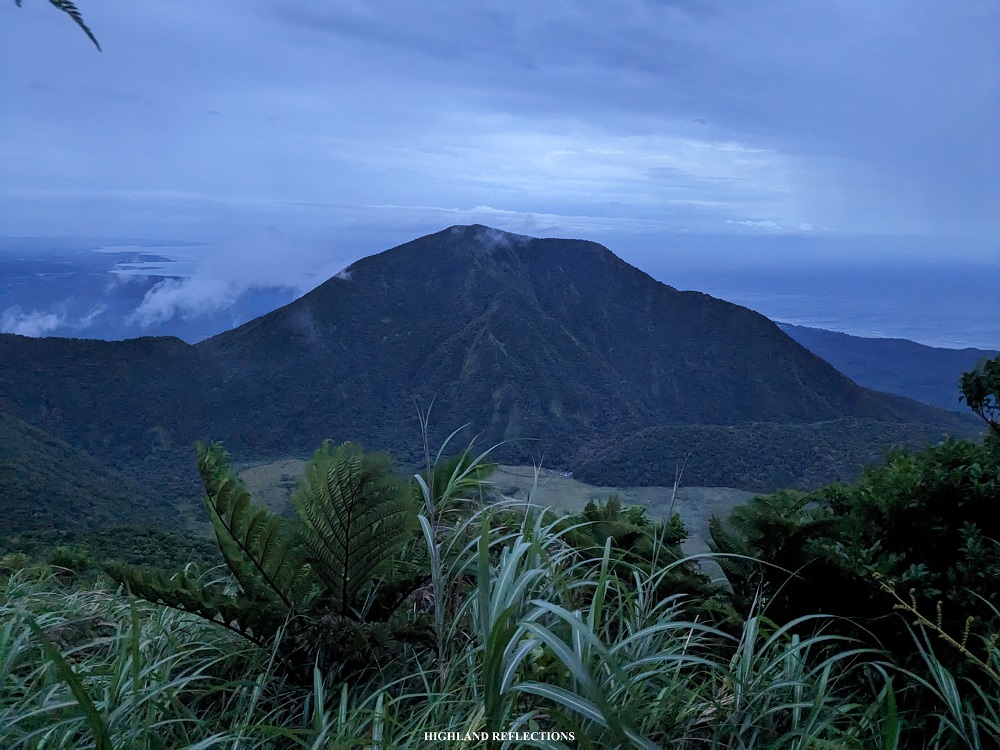
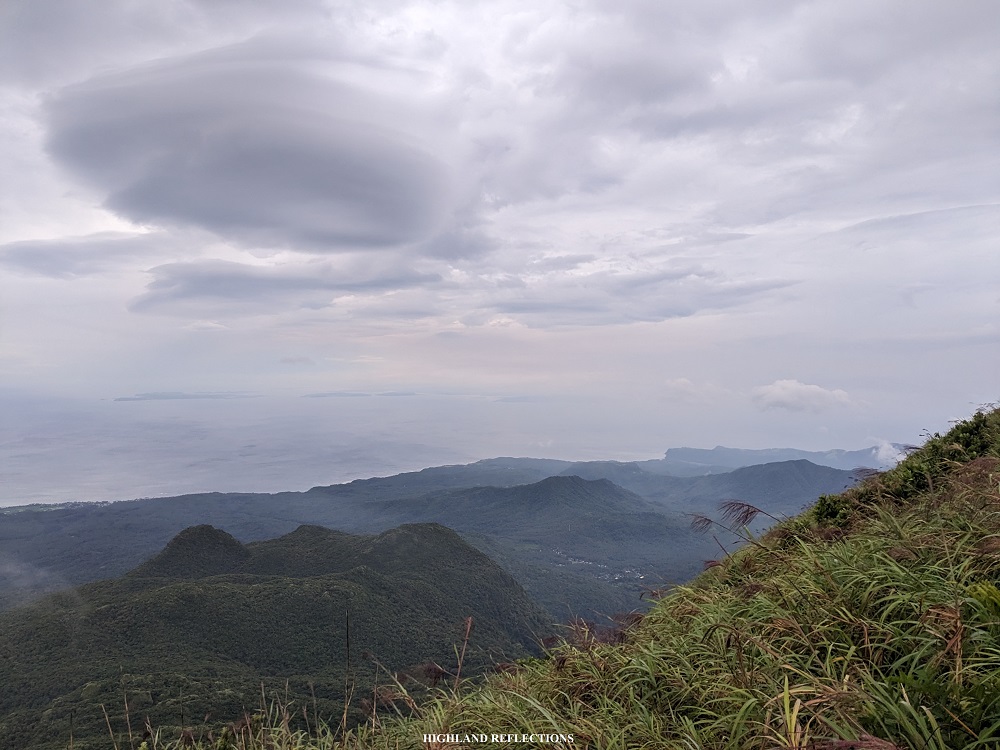
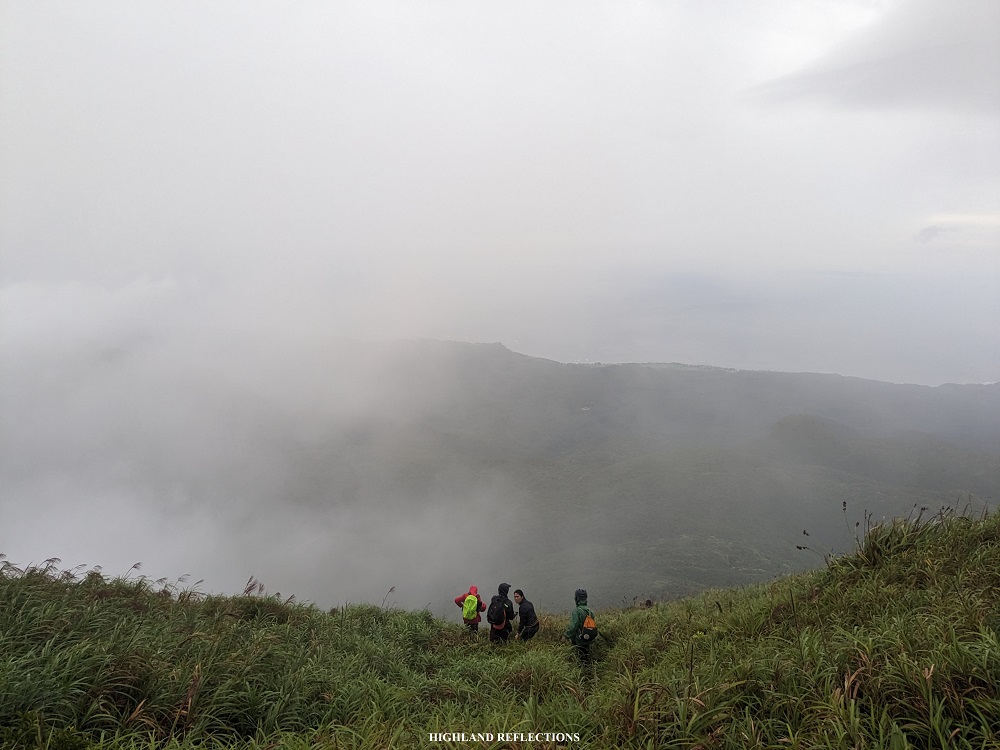
The view, however, was enclosed by a thick swathe of fog as we gained more elevation. The wind blew strong as well, bringing some rain droplets which soaked us as we were nearing the summit. We tried to wait for it to stop, but it seemed like it will take another three hours for the gloomy weather to halt. And so, we continued with the last portions of the assault along the semi-scree slopes near the summit.
We arrived at the summit at 7 in the morning with no view and only howling winds. Although we could see the end of the scree slope forming the crater, the thick fog did not provide us views of the Blackbird Lake, Bulusan’s crater. In fact, we were discouraged to go near the edge of the crater as the wind was tempestuous that our bodies were getting pushed by it!
Mulling over if we should wait for a clear view (as the park management radioed to us that it will probably be better by 11a.m.), we decided to descend and forego the crater view. We were back at the campsite at about 9 in the morning. We had our breakfast, consisting of longganisa, eggs, and pancit bato.
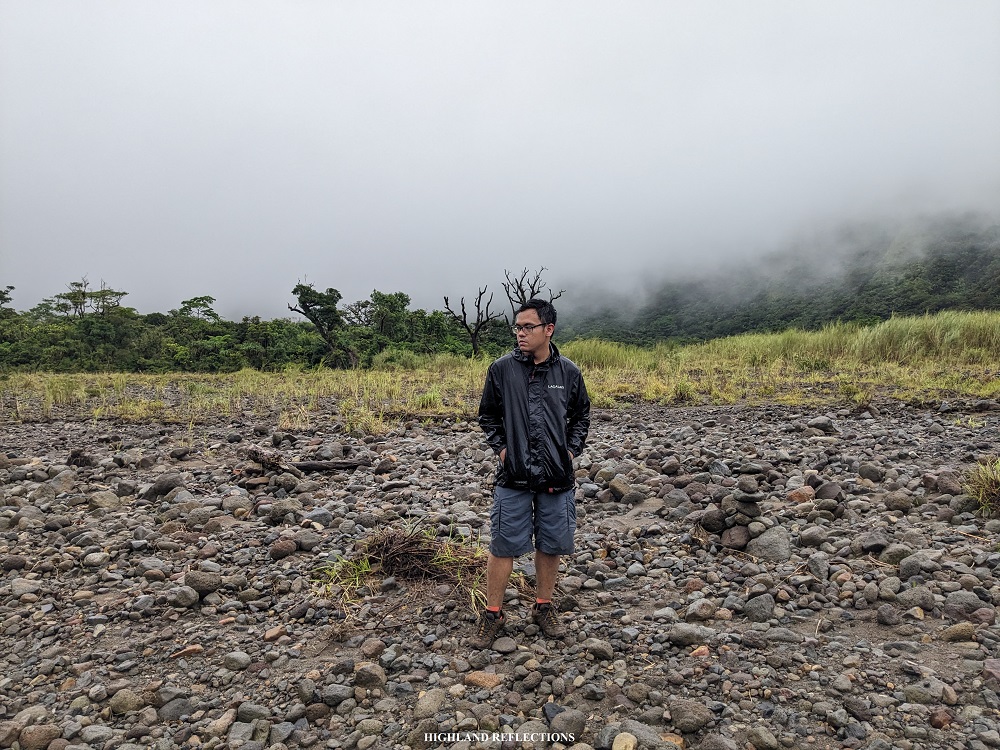
Afterwards, we packed up our tents and broke camp. Past 10:30, we started the hike back to Bulusan Lake, which we reached at 1 in the afternoon. The descent was very enjoyable. I was able to spot a butterfly, a bee, and a worm which had all navy blue colors. If it weren’t for the possibility of danger, I would have taken a picture of those rare animals! The flora and fauna in Bulusan are surely thriving!
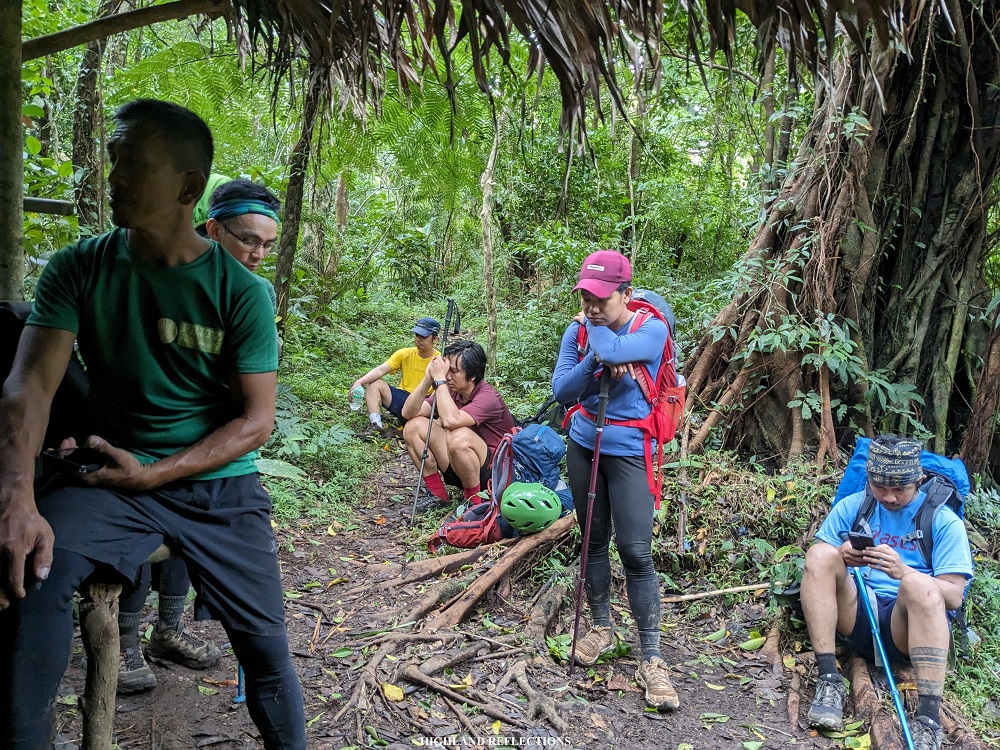
Upon arriving at the vicinity of Bulusan Lake, we were given complementary hot wet towels and an unlimited serving of cucumber juice. Afterwards, we were given a 10-minute leg massage (a back massage is also an option) beside the lake. Some of our companions took the chance to kayak.
Once we were complete and everyone cleansed, we started the long journey back home to Manila, arriving there at 7 in the morning the next day. We brought back memories of, as what most of us in the trip would say, a sulit hike in spite of the foggy view in the summit area. True enough, it was a one-of-a-kind hike that offered more than what I expected. Kudos to such an awesome team behind Win Calleja and Bulusan Volcano Natural Park!
Still, as my primary objective for that hike was to see Blackbird Lake, I will surely come back for another hike! Hopefully, I get to see Bulusan’s primary crater next time.
Itinerary
Day 0
06:00PM Meet-up in Greenfield
07:00PM ETD to Bulusan, Sorsogon
Day 1
08:00AM Sorsogon City, breakfast
10:00AM Bulusan Volcano Natural Park, register
11:00AM Bulusan Lake, orientation
12:30PM Start of hike
12:50PM First kubo, plant Narra tree
02:00PM Ranger station, rest
03:00PM Aguingay Lake campsite (~890 MASL), set camp
06:30PM Dinner
07:00PM Lights out
Day 2
02:00AM Wake-up call, breakfast, stretching
03:30AM Summit assault
05:30AM Second kubo, rest
07:00AM Summit, take pictures
07:30AM Start descent to campsite
09:00AM Breakfast, break camp
10:30AM Start descent
01:00PM Back in Bulusan Lake, take refreshments
02:00PM Back in registration area, wash-up
03:00PM ETD Back to Manila

 Highland Reflections: Kaisipan, Karanasan, at Kamalayan